
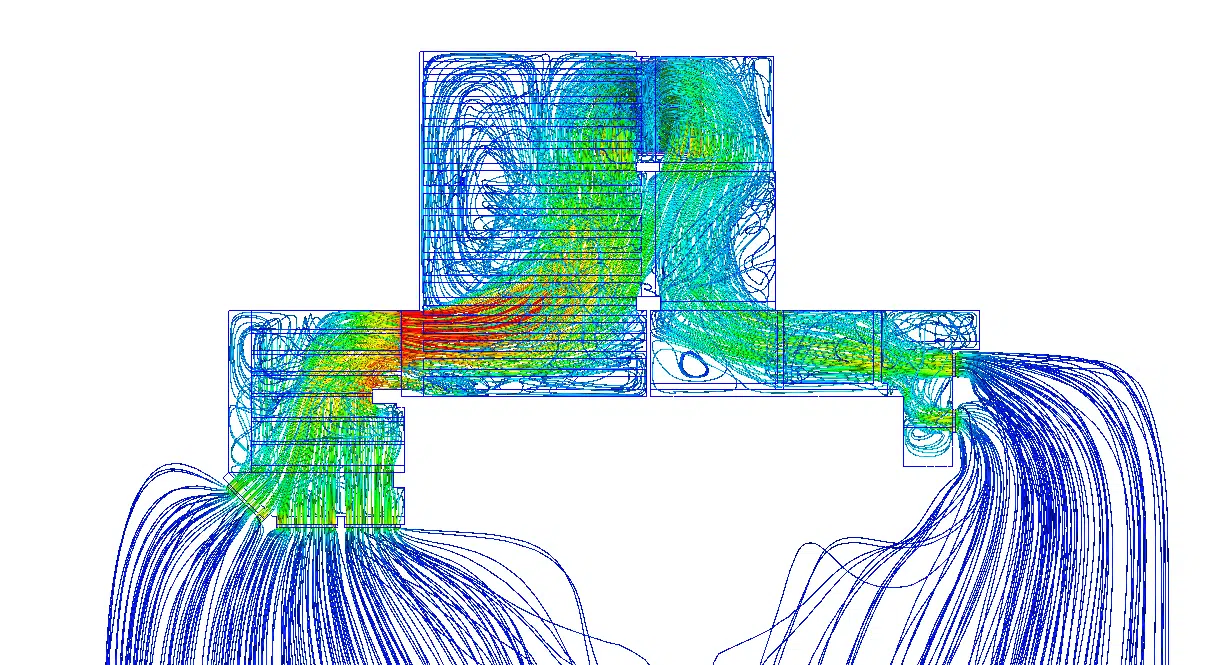
Pressure losses in an air-intake plenum in relation to fire-safety systems: comparing variants to guarantee the regulatory flow rates.
The major restructuring of office buildings at La Défense entails the reconfiguration of a plenum acting as an air collector, which feeds numerous air-handling units (AHUs). These supply air to the fire-safety systems.
The EOLIOS studies made it possible to compare the different pressure-loss levels across the variants devised by the architects.
The essentials. CFD pressure-loss study of the AF2 air-intake plenum, second collector of the office-restructuring operation at La Défense: full 3D modelling from on-site surveys, grilles sub-modelled from the manufacturer's datasheets and comparison of the layout variants to guarantee the fire-safety flow rates.
As part of the restructuring of office buildings at La Défense, the AF2 plenum acts as an air collector: it distributes air to the units feeding the smoke-control and pressurisation devices. A controlled pressure loss in this plenum is essential so that the safety fans deliver the regulatory flow rates in the event of fire.
The AF2 plenum serves a second network of air-handling units; the study verifies that its reconfiguration does not introduce excessive pressure losses relative to the required safety flow rates.
Technical volume acting as a collector: it draws in fresh air through its intake grilles and distributes it to the air-handling units. In a smoke-control system, it provides the make-up air compensating the extractions.
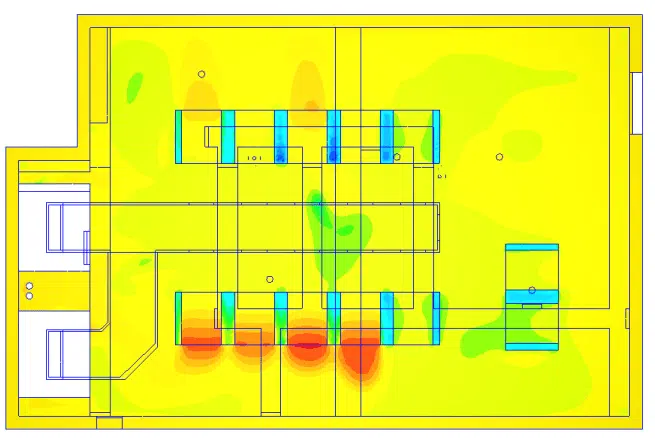
The entire plenum was modelled from on-site surveys. The air-intake grilles were “sub-modelled” from the manufacturer's datasheets, in order to reproduce their pressure loss faithfully without needlessly increasing the mesh.
This approach makes it possible to simulate precisely the air velocities and pressure fields inside the collector, and to locate the turbulence and restriction zones responsible for the pressure losses.
Numerical resolution of the fluid-mechanics equations in a 3D model: it renders velocities, pressures and turbulence at every point of the plenum; see our resource what is CFD simulation?
Simplified representation of a component (here the air-intake grilles) through its manufacturer characteristics rather than its detailed geometry: the calculation remains faithful while keeping the mesh size under control.
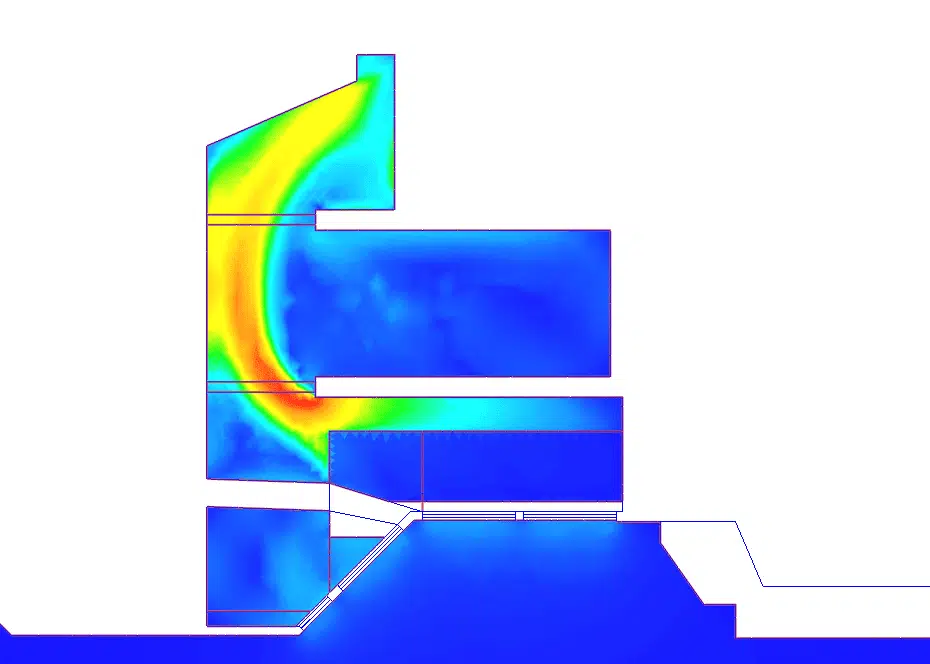
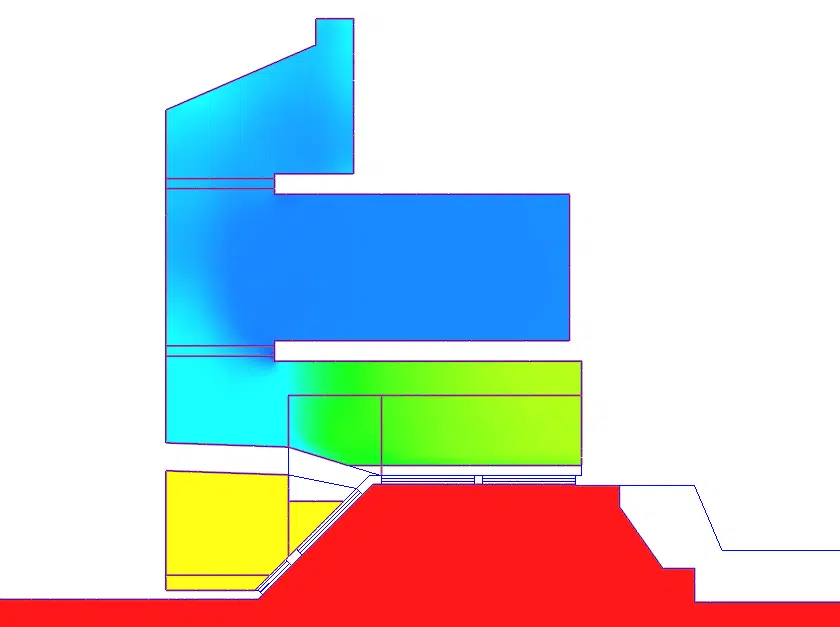
Several layout variants devised by the architects were simulated and compared on the pressure-loss criterion. The studies made it possible to rule out the configurations that degrade the plenum's performance.
The selected configurations ensure the required fire-safety flow rates are maintained, while remaining compliant with regulatory requirements. CFD asserts itself here as a decision-support tool to reconcile architectural constraints with the performance of safety systems.
Key point. Compliance rests on maintaining the air-intake flow rates in a fire situation: any layout variant modifying the plenum's geometry or its grilles must be re-simulated before validation.
Difference with AF1, verification after reconfiguration, handling of the grilles and reading of the results: the answers to the questions this study raises.
Both plenums belong to the same restructuring operation at La Défense: AF2 serves a second network of air-handling units. The study approach is identical and the two collectors were verified separately; see also the study of the AF1 plenum.
Any change to the collector's geometry or to the layout of the grilles alters the resistance seen by the fans. If the total pressure loss becomes excessive, the air-intake flow rates required in a fire situation are no longer guaranteed.
They are sub-modelled from the manufacturer's datasheets: their pressure loss is reproduced faithfully without detailing their geometry, which keeps the mesh under control.
The air velocities and pressure fields throughout the collector, as well as the location of the turbulence and restriction zones responsible for the pressure losses. These maps allow the variants to be compared objectively.
It is ruled out: only the configurations maintaining the required fire-safety flow rates, compliant with regulatory requirements, are retained by the design team.
Explore our expertise, projects and technical papers to go further than the FAQ.
CFD pressure-loss study of the AF2 air-intake plenum (office restructuring at La Défense): full 3D modelling from surveys, grilles sub-modelled from manufacturer datasheets, and comparison of architectural variants to rule out penalising configurations and guarantee the compliance of the fire-safety systems.
 OfficesISI — Offices — Grande Armée
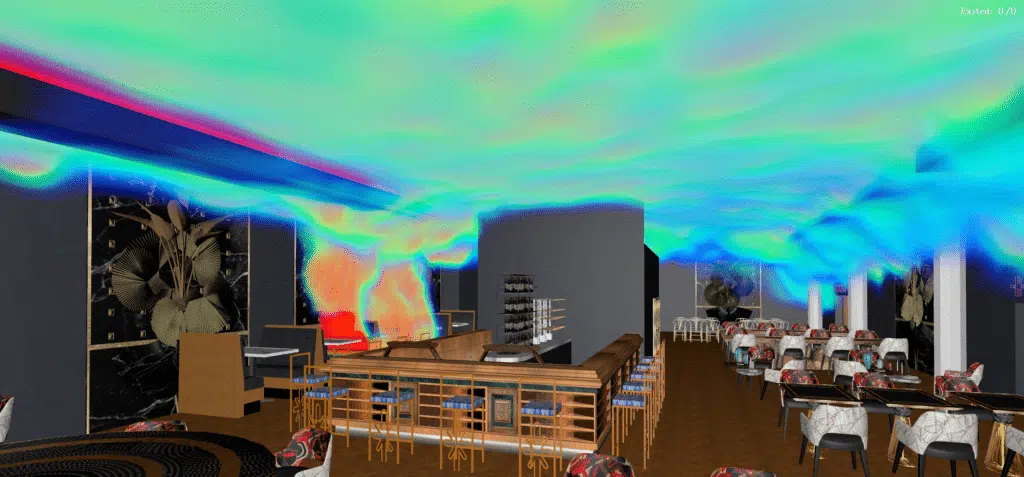 RestaurantSmoke control engineering — Restaurant Type N
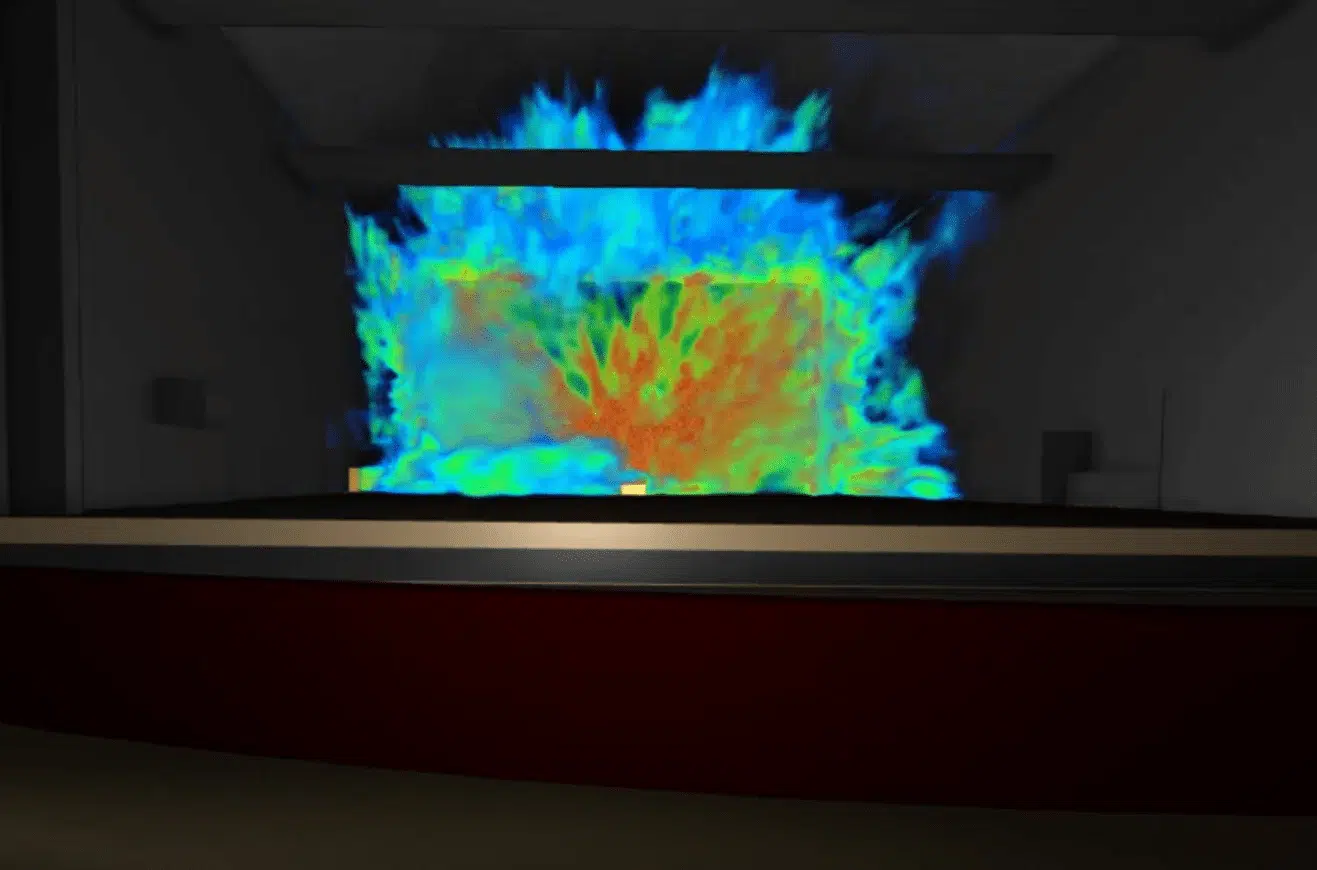 TheatreSmoke control engineering — Theatre
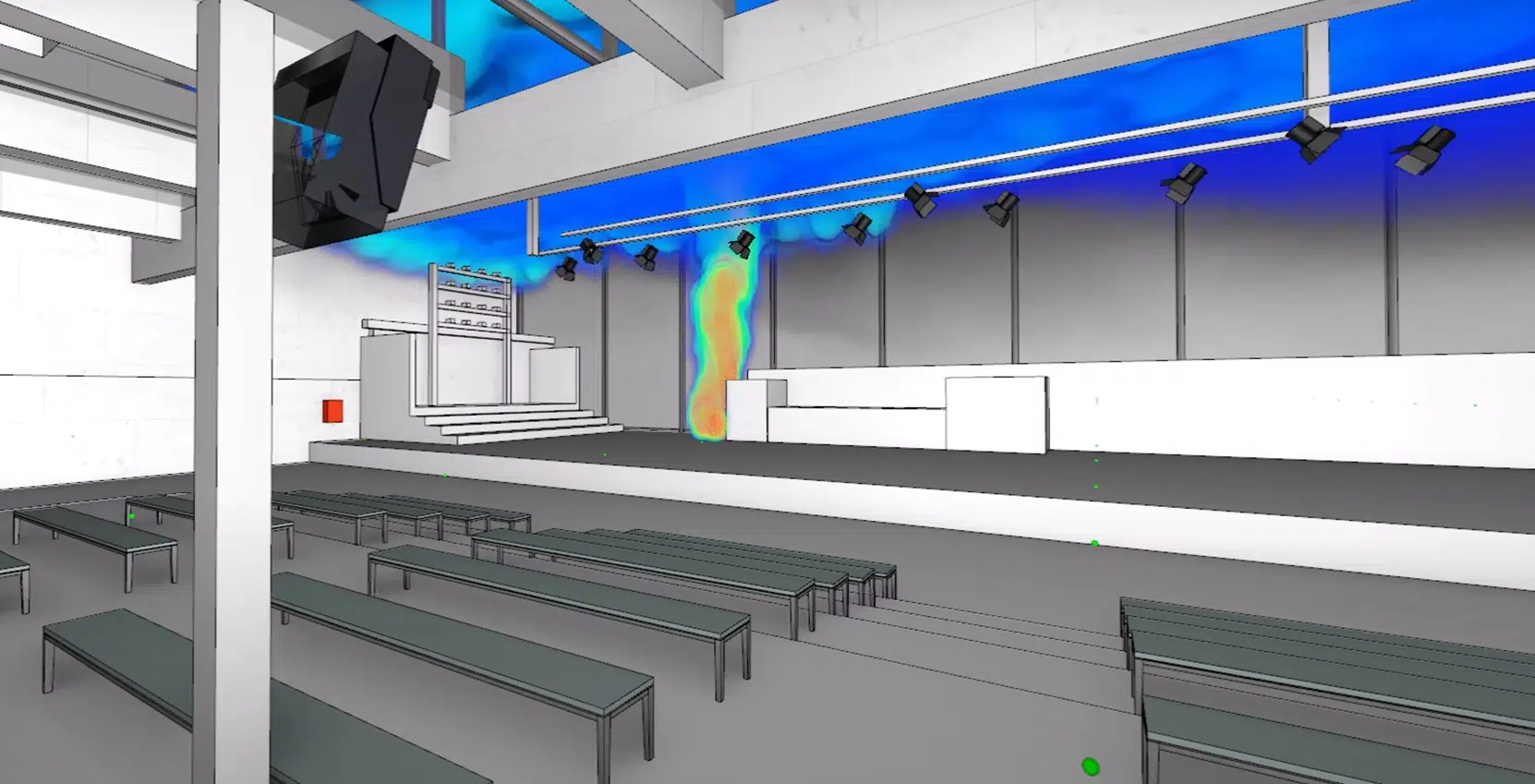 EventsFire engineering — Fashion show
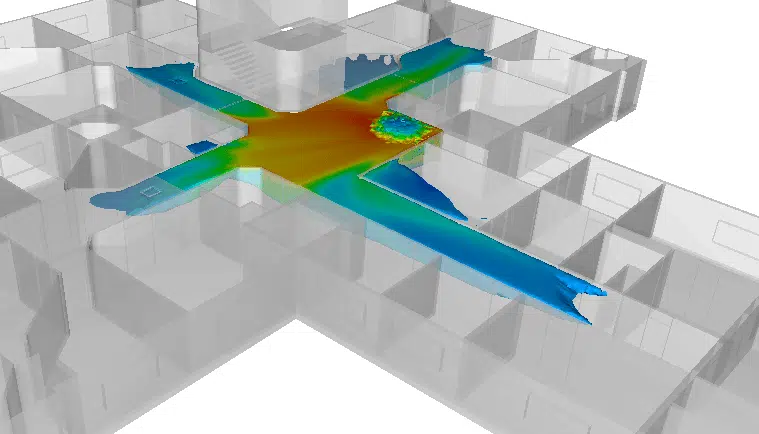 HospitalSmoke control — Pontoise hospital
 Data CenterSmoke control — Data Center (GAZ NOVEC)
PlenumSmoke extraction plenum — AF1
Data CenterSmoke control — Data Center (GAZ NOVEC)
PlenumSmoke extraction plenum — AF1
CFD expertise, delivered projects and technical dossiers: the whole Smoke control field in one place.
The easiest way is to talk it through together. Our engineers will reply with an initial technical read.