What is a sprinkler?
Sprinklers are automatic extinguishing devices used to protect buildings against fire.
In this paper, we explain their operating principle, their installation and their advantages in terms of fire safety. You will also discover the standards and regulations surrounding their use, as well as the best practices for ensuring their effectiveness.
Sprinkler networks: the key to fire safety
How it works
The sprinkler outlet nozzle is designed to distribute water or the extinguishing agent uniformly over the surrounding area, making it possible to effectively control and suppress the fire. This early-trigger mechanism makes it possible to act quickly to control and extinguish incipient fires.
By acting from the earliest stages of the fire, sprinklers prevent the rapid spread of flames, limiting fire and smoke damage. It is important to note that sprinklers do not all activate at the same time: each sprinkler is independent and activates only when it detects a sufficiently high temperature at its location. In this way, only the necessary sprinklers are activated, minimising water damage and allowing better fire control.
The different types of sprinkler heads
There are several types of sprinkler heads, each with specific characteristics and particular applications:
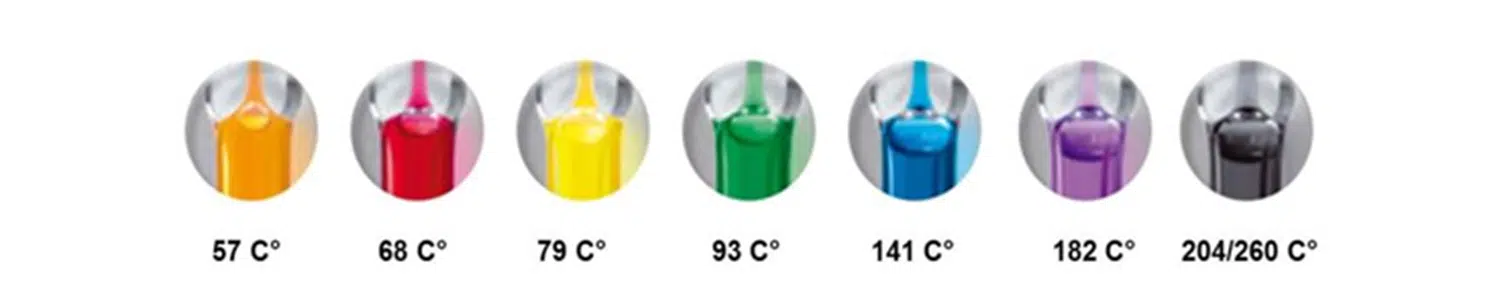
1. Standard sprinkler head — the most common type. It usually consists of a glass bulb containing a heat-detecting liquid; when the temperature reaches the preset threshold, the bulb shatters, allowing the water or extinguishing agent to be released.
2. Fusible-link sprinkler head — uses a thermal fusible link that melts at a specific temperature; as it melts, it releases the sprinkler valve, allowing the extinguishing agent to flow.
3. Pre-action head — used in environments with a high risk of accidental discharge (computer rooms, water-sensitive areas). Before the valve opens, a pre-action detection (fire-detection system or smoke detector) must be triggered.
4. Quick-response head — designed to react to heat even faster, often used where rapid spread is a high risk (warehouses, industrial facilities).
5. Water-mist head — uses a water-mist technology rather than a traditional jet: fine droplets allow faster heat absorption and more effective suppression, often used where the protection of assets is paramount (archives, museums).
These different types offer solutions suited to various situations. The selection depends on the fire risk, the building environment and the applicable regulations: it is important to consult a specialised professional to determine the most appropriate type for each case.
Sprinkler head layouts
Sprinkler heads can be installed in different layouts to suit the specific needs of each building:
The most common layouts
- Pendent layout — fixed to the ceiling, suspended from a threaded rod or bracket; water flows downward and spreads over the fire area.
- Upright layout — fixed to the floor or the base of walls, projecting the jet upward; used where pendent heads risk obstruction (plant rooms, vibration areas).
- Concealed or semi-recessed layout — integrated into ceilings or walls, flush with the surface: less visible and more aesthetic.
- Sidewall layout — installed directly on the walls, often near the ceiling, when the ceiling is not suitable for a pendent or upright installation.
The choice of layout depends on various factors: building type, architectural constraints, applicable regulations and aesthetic constraints.
French regulation on sprinkler installation
The French Construction and Housing Code (CCH)
The Construction and Housing Code (CCH) is the main reference in France: it establishes the fire safety requirements for different types of buildings. According to the CCH, certain public-access buildings (ERP) of categories J, M, N and group U must be fitted with fire-protection systems, including sprinklers — for example hotels, performance venues, sports facilities, shopping centres, restaurants and educational establishments.
Certain categories of industrial and commercial buildings must also be fitted with them. These requirements are determined according to the building classification and its use; the CCH sets the minimum standards to prevent, detect and fight fires.
The NF S61-932 standard
The NF S61-932 standard complements the CCH by providing specific technical requirements for the design, installation and maintenance of sprinkler systems. It addresses several aspects:
What the standard covers
- Risk classification according to the activities present, determining the protection measures and the type of system.
- Required water flow rates for effective suppression (depending on area, height, classification…).
- Head spacing to ensure uniform coverage and distribution.
- Performance test procedure (verification methods and protocols).
The standard is regularly updated to incorporate technological developments and best practices. Before installation, it is essential to submit a file to the competent safety commission, responsible for reviewing the project and ensuring its regulatory compliance; this step is crucial to obtain authorisation to install the system.
System maintenance
Once installed, the sprinkler system must undergo regular inspections by an approved body. These inspections check overall operation and good condition: inspectors examine the heads, the detection systems, the control valves and the water supply, and carry out performance tests.
After each successful inspection, a certificate of compliance is issued, attesting that the system meets the regulatory requirements. Inspections and certifications are an integral part of monitoring and maintenance, ensuring that the system remains operational and effective throughout the building's life, for continuous protection.
A sprinklered parking lot has its smoke-extraction rates cut by a third
Sprinklers lower the fire power taken into account by the regulations: in a covered parking facility, extraction drops from 900 to 600 m³/h per vehicle. See our paper on smoke extraction in underground parking lots.
Simulating sprinkler systems
FDS simulation
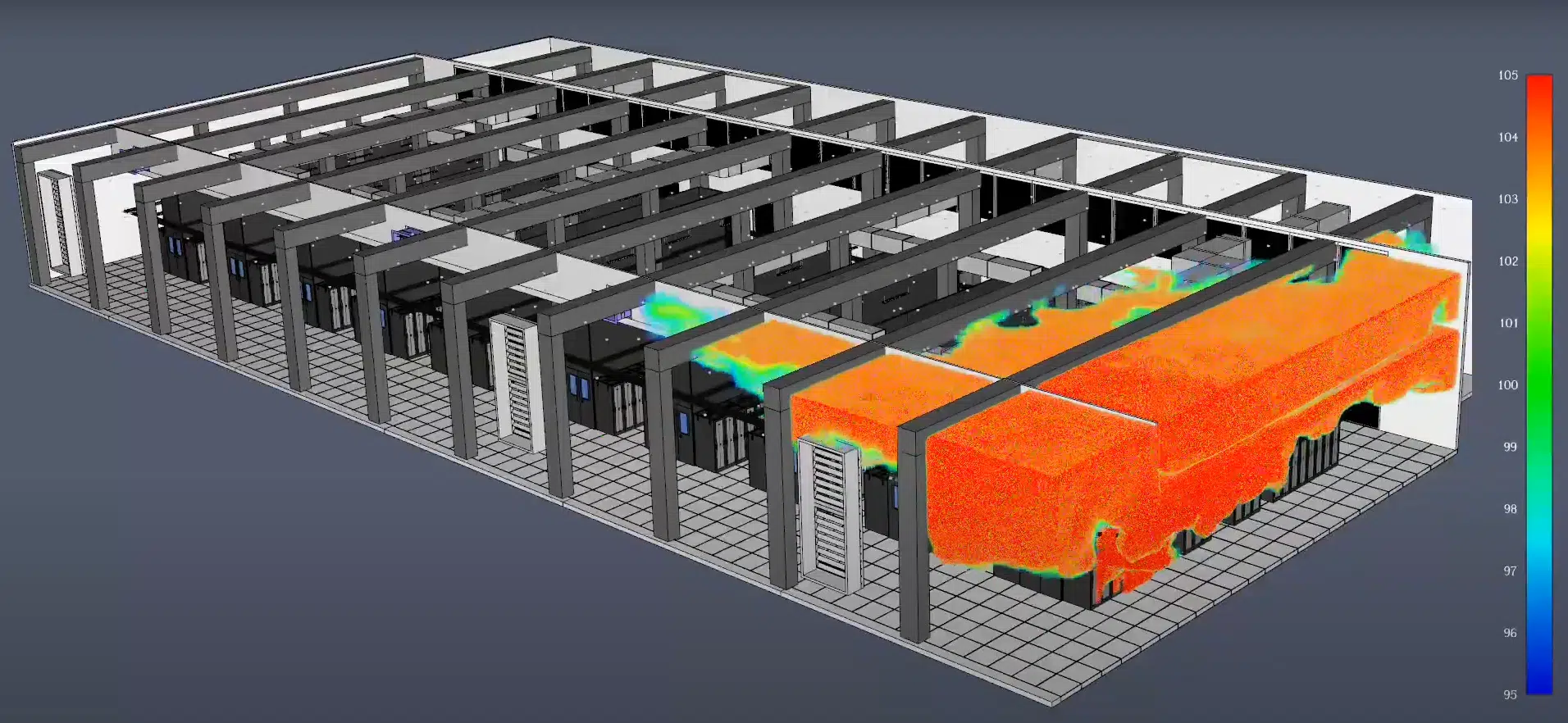
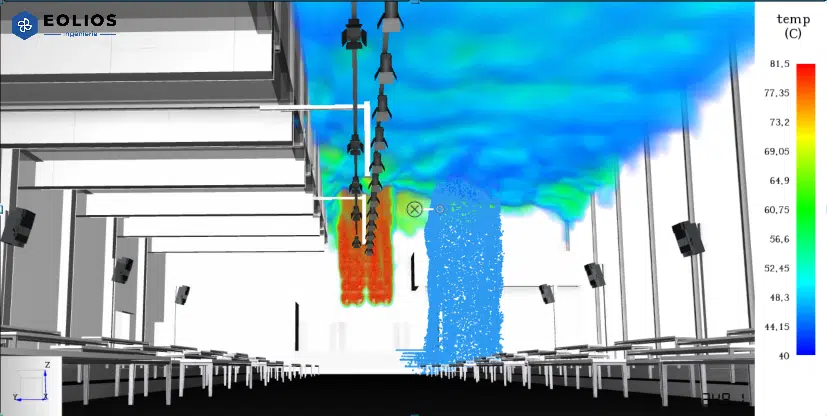
FDS (Fire Dynamics Simulator) simulation of sprinklers is an advanced method for assessing the effectiveness of automatic extinguishing systems in fighting fires. FDS is a numerical modelling software for fire phenomena that uses the conservation equations of mass, momentum and energy to simulate the interactions between smoke, heat, combustible gases and the dispersion of the extinguishing water.
Using precise data on the sprinkler characteristics (flow rate, velocity, spray pattern), FDS simulation predicts the system's behaviour under different fire conditions (size and location of the fire source). With this technique, designers and engineers can optimise the design and positioning of sprinklers, ensuring effective protection and occupant safety.
FDS simulation, fire safety engineering, smoke control: our engineers support you.