Laboratory cleanroom
Home/Laboratories/Cleanroom dust
Expertise · Laboratories

Cleanroom dust study.

A specialist in dust dispersion and low-velocity airflow, EOLIOS simulates through CFD the phenomena specific to cleanrooms to control contamination and guarantee optimal air quality.

Low-velocity airflowDecontaminationReading 6 min
Scroll
Modelled dispersion

Fine-particle trajectory and accumulation zones predicted.

At-risk zones identified

Mapping of the contamination points and targeted corrective measures.

Compliance ensured

Decontamination, ramp-up and compliance with cleanliness standards.

01 — Know-how

EOLIOS, a know-how unique in Europe

EOLIOS is a CFD consultancy specialising in the study of dust dispersion and low-velocity airflow. We simulate the airflow phenomena specific to cleanrooms to analyse your challenges and propose suitable solutions.

Model

  • Dust modelling
  • On-site measurement of concentrations
  • A passionate team

Clean

  • Sizing of the air-cleaning systems
  • Air-quality optimisation
  • Decontamination study

Secure

  • Contamination control
  • Identification of the at-risk zones
  • Compliance upgrade
02 — Airflow

How does cleanroom airflow work?

Why study cleanroom airflow?

Airflow is a crucial aspect of the design and operation of these sensitive spaces: mastering it is fundamental to maintaining a clean, controlled environment intended for the manufacture of contamination-sensitive products — semiconductors, pharmaceuticals, medical devices and electronic products. This control makes it possible to minimise the contamination of the air and surfaces, reducing the risks of failure and batch rejection, and improving the quality and reliability of the products. Contamination can come from workers, equipment, materials, the outside environment and disturbances of the airflow.
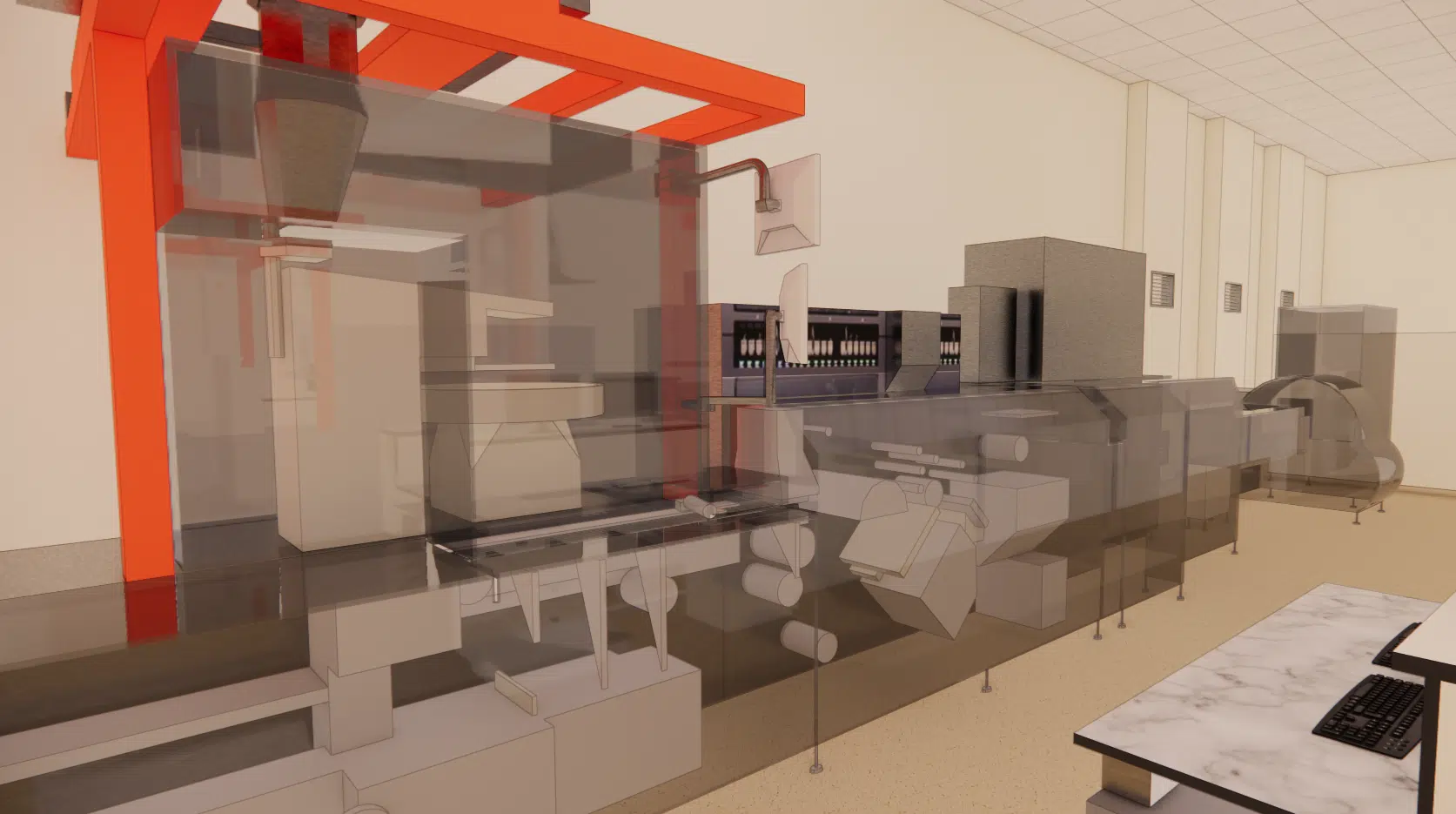
3D CFD modelling of a pharmaceutical laboratory
CFD modelling of a pharmaceutical laboratory

Fine-dust control, a recurring challenge

Fine dust consists of small particles that are difficult to filter and control in clean environments. They come from workers, equipment or materials, but can also be generated by the processes themselves — etching, spraying, pharmaceutical manufacturing. It is essential to maintain an adequate level of quality and safety to prevent their spread: dust can damage the products, harm quality and lead to additional costs or delays.
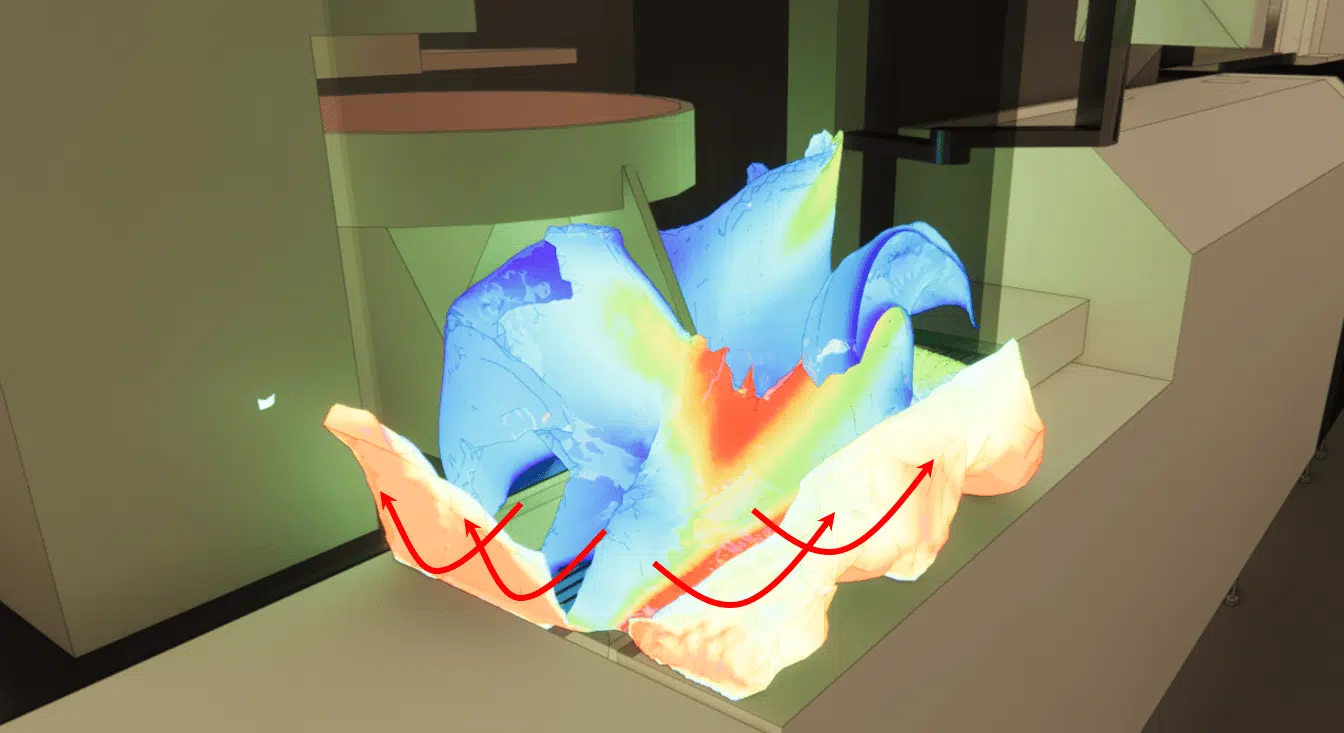
CFD modelling of the spread of drug dust
Spread of drug dust in the cleanroom atmosphere
03 — Simulation

Why CFD simulation to study cleanrooms?

What help at the design stage?

CFD simulation makes it possible to model the specific behaviours of the air and particles in the atypical environment of cleanrooms, and to predict the distribution of contaminants. This low-velocity airflow is complex to anticipate: particular phenomena such as dead zones or recirculation zones can appear. CFD also simulates the effects of various configurations — location of the supply and return vents, filter configuration, optimisation of the air flow rates.
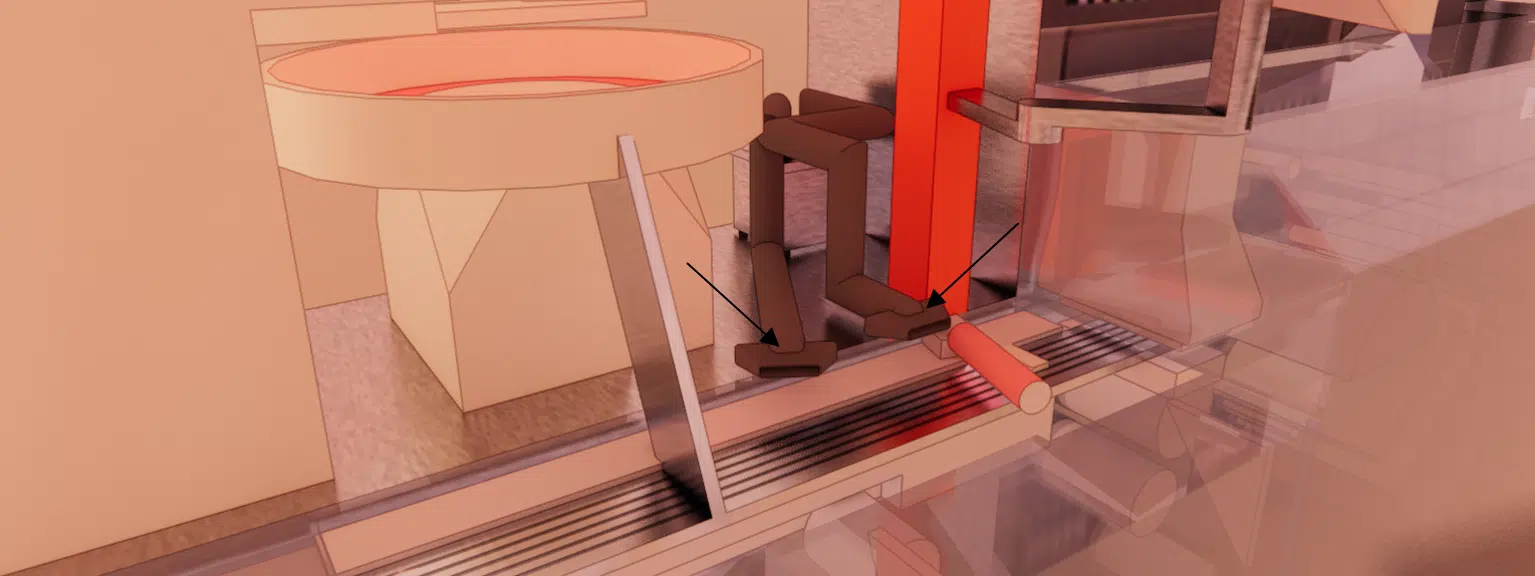
Sizing of a fine-dust extraction system
Sizing of specific fine-dust extraction systems

Why use it for fine particles?

CFD helps to identify the high-risk zones of contamination. In industrial environments, the use of highly powdery products is common and can compromise the level of quality and safety. Thanks to simulation, it is possible to check the different designs, anticipate the at-risk zones and take suitable measures to correct them quickly and at lower cost.

Valuable help for compliance

CFD makes it possible to test different design scenarios and validate their compliance with the standards in force, and to optimise the operating parameters — air velocity, temperature distribution, relative humidity. It is also possible to determine the time needed to completely remove the pollutants (decontamination study) and the ramp-up time of the installations, guaranteeing a high level of cleanliness and minimising the risks of contamination.
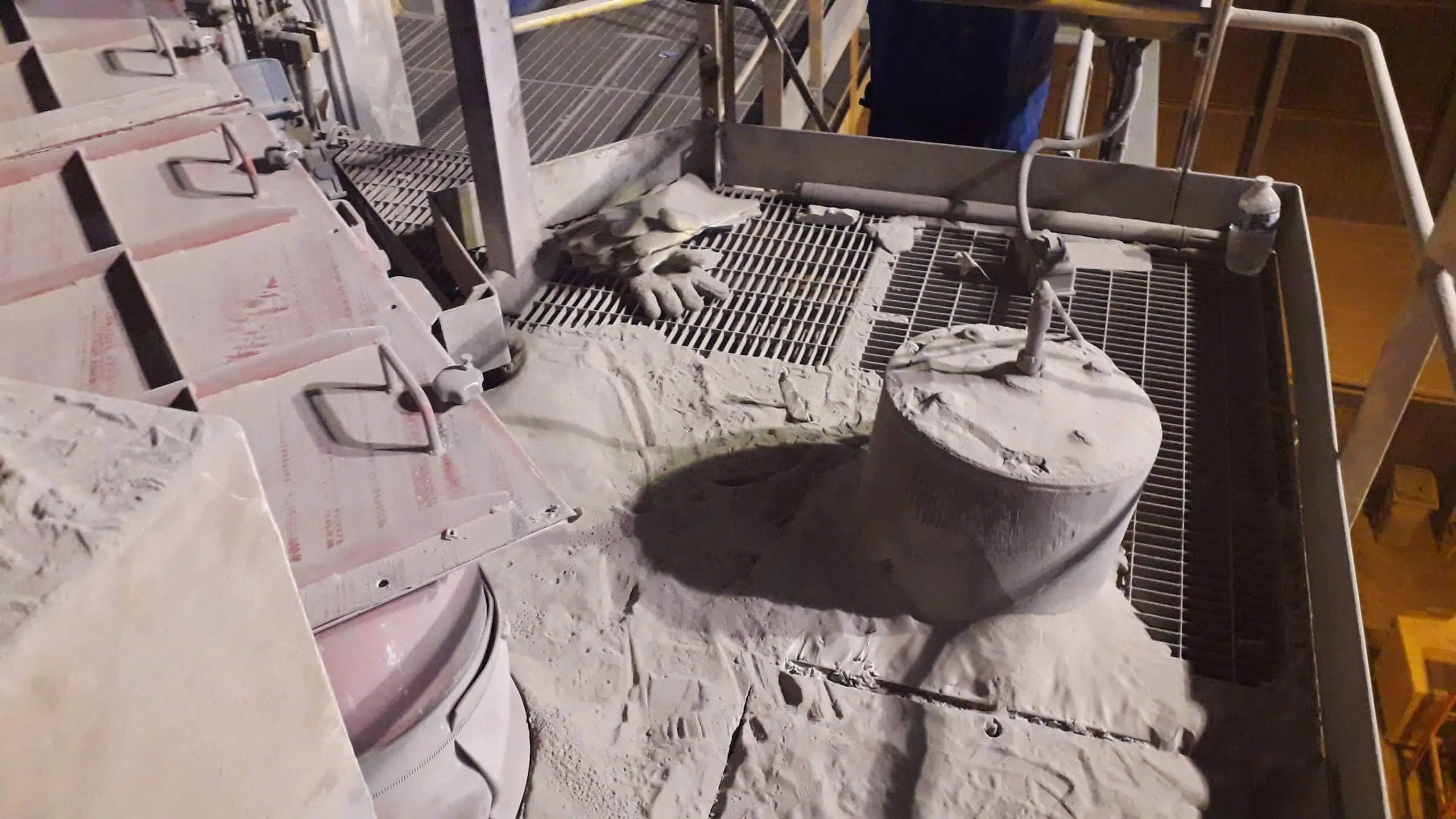

Expertise: powder & fine-dust propagation

Expertise: cleanroom airflow audit

FAQ

Frequently asked questions

What manufacturers of clean environments most often ask us about controlling dust.

Why is studying fine dust so delicate?

Fine dust consists of small particles, hard to filter and control, generated by personnel, equipment or the processes themselves such as etching or spraying. Their propagation can damage products, degrade quality and cause the rejection of costly batches. The same issue is found at industrial scale in our expertise on the propagation of powders and fine dust.

Why use CFD rather than measurement alone?

The low-velocity airflow of cleanrooms is hard to anticipate: dead zones and recirculation zones can appear where spot measurement does not detect them. The simulation models the behaviour of air and particles throughout the volume and predicts the distribution of contaminants. It also tests the effect of supply and return locations, filter configuration and airflows.

How does the simulation help at the design stage?

It allows a large number of configurations to be tested without multiplying costly, time-consuming experimental prototypes. High-risk contamination zones are identified and the specific dust-extraction systems are sized. Design decisions thus rely on quantified data rather than experience alone.

Does CFD make compliance easier?

Yes: the simulation validates the compliance of different design scenarios with the standards in force and optimises the operating parameters, air velocity, temperature distribution and relative humidity. It also determines the decontamination time and the time to reach regime. A high level of cleanliness is thus guaranteed while the approach is documented.

Which sectors are most concerned?

Cleanrooms equip the pharmaceutical industry, semiconductors, medical devices and electronics, where the slightest particle can compromise a batch. R&D laboratories handling powdery products are also highly exposed. In all these contexts, CFD predicts particle dispersion and sizes the air treatment as closely as possible to the real need.

Media library · Cleanrooms

The cleanroom, simulated first.

Low-velocity airflow, fine-particle capture and containment: our CFD simulations reveal the real behaviour of the air and dust.

The whole media library
High-fidelity laboratory airflowLow-velocity flows in a cleanroom
Fine-particle capture
Laboratory equipped with fume hoods
Use cases · Sectors

Where do we study cleanroom dust?

As soon as a sensitive process requires dust control, CFD predicts the dispersion of the particles and sizes the air cleaning. Here are the typical contexts.

Resources

Related technical papers

To go deeper into dust control and the airflow of controlled environments, continue with our related know-how.

Explore the field

Laboratories: continue exploring.

CFD expertise, delivered projects and technical dossiers: the whole Laboratories field in one place.

CFDExpert engineers
20+Countries
R&DResearch & innovation
Have a project?

The simplest thing is to talk it through together.

Dust to understand, a cleanroom to bring into compliance, air cleaning to size? Our CFD engineers model the dispersion of the particles and secure your sensitive environments.